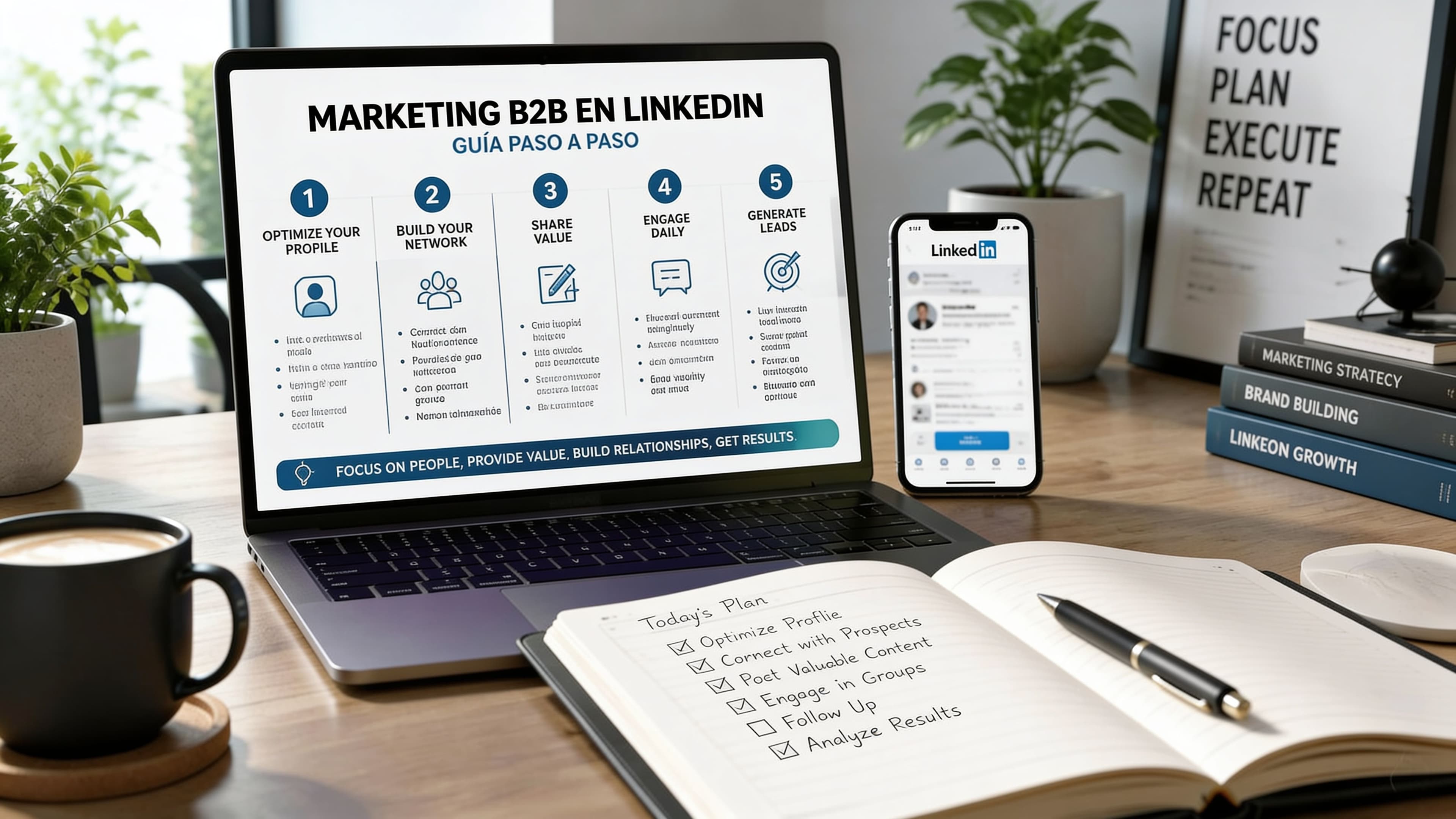

Most advice on social selling B2B LinkedIn is backwards. It tells teams to post more, comment more, and hope visibility turns into pipeline, but buyers don't reward noise, they reward relevance, timing, and credibility.
LinkedIn has already made the case for treating social selling as a measurable sales discipline, not a branding hobby. The platform says sales professionals with a strong Social Selling Index generate 45% more sales opportunities and are 51% more likely to hit quota, while social selling can increase engagement with key connections by 30% (LinkedIn social selling materials). If you're a marketing leader, that's the bar. You need booked meetings, not pretty posts.
Table of Contents
- Why Most Social Selling Fails Before It Starts
- Optimizing Profiles and Defining the Ideal Customer
- Building a Content Engine That Builds Authority
- Activating Employees as a Scalable Sales Channel
- Trigger-Based Outreach Instead of Connection Blasts
- Measuring Pipeline, Not Impressions
- Rolling Out Social Selling in 90 Days
Why Most Social Selling Fails Before It Starts
The biggest mistake is starting with content and ending with hope. Teams publish thought leadership, chase impressions, and then wonder why no one raises a hand. That is a visibility campaign, not a social selling system with a conversion layer.
Structure, not effort, is the bottleneck
A lot of programs collapse because they confuse activity with progress. A post can earn attention and still do nothing for pipeline. A connection request can look busy and still miss the signal that matters, buyer intent.
LinkedIn's own framework points in the right direction. The Social Selling Index benchmarks performance across professional brand, finding the right people, engaging with insights, and building relationships (LinkedIn Sales Navigator). That structure matters because it separates random posting from a process that can move an account toward a conversation.
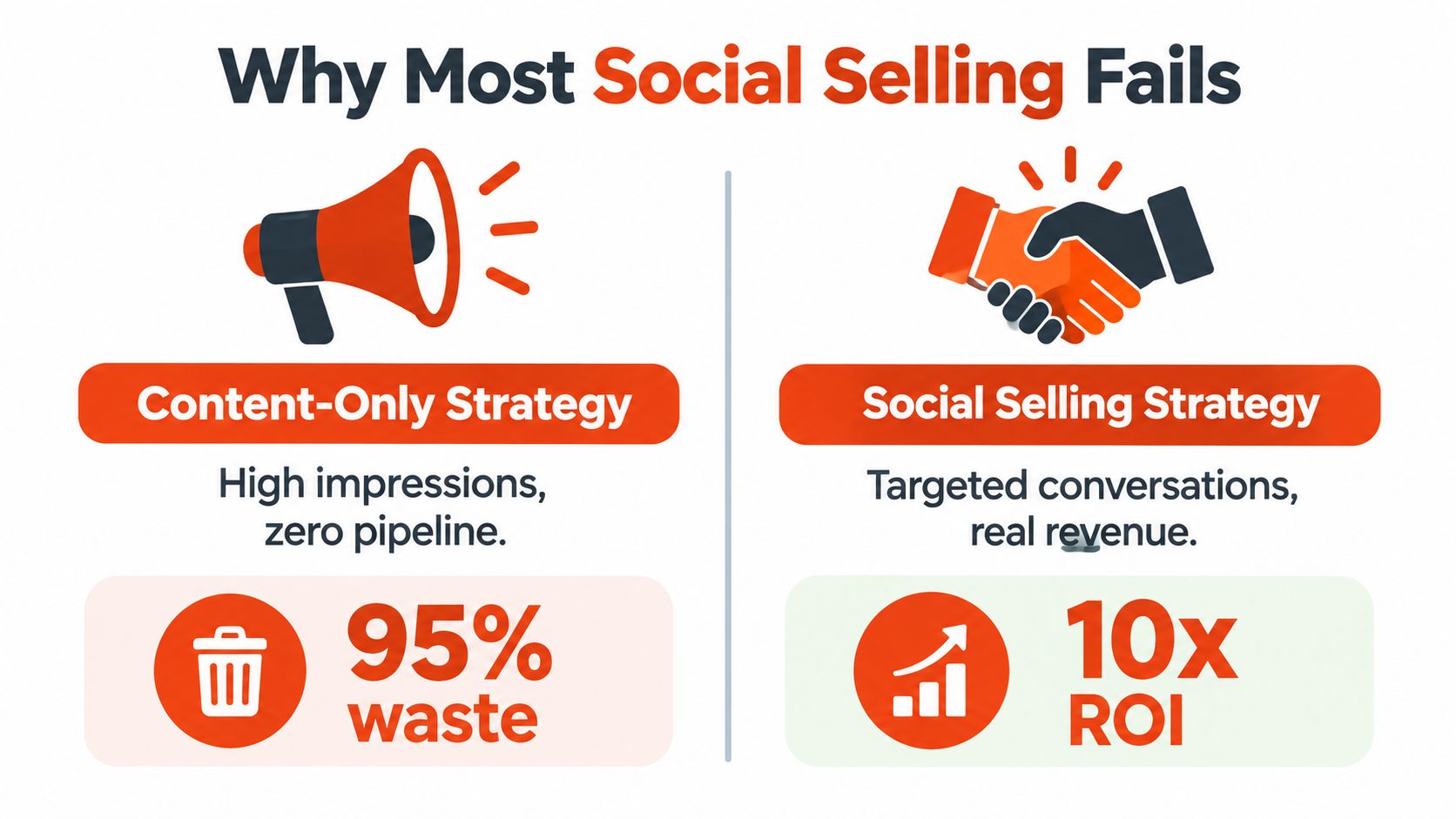
Practical rule: If your team cannot point to meetings started, pipeline influenced, and deals advanced, you do not have a social selling program. You have publishing.
Build the system in three stages
Treat the channel like a pipeline engine with three distinct stages. Audience-building gets the right people into view. Warming creates trust through useful contact and relevant content. Conversion turns interest into a meeting when a trigger appears.
That last stage is where conversion breaks down when outreach is not tied to a trigger. Teams blast everyone, then blame the platform when response rates stay weak. The better move is simple. Follow buyer signals, not your own calendar.
For consulting firms, software companies, and any high-consideration sale, the goal is measurable opportunity creation. Reach matters only if it creates a path to conversation. If it does not, it is just expensive noise.
Optimizing Profiles and Defining the Ideal Customer
A weak profile kills trust before the first message goes out. Senior buyers scan LinkedIn fast. They decide in seconds whether you look like a credible advisor or a generic seller. If the profile is vague, the outreach feels vague too.
Make the profile sound like a buyer would trust it
The profile needs to say what you solve, who you help, and why your perspective matters. Lead with a headline that ties to buyer outcomes, not your internal title. Keep the summary short and specific, written for the person you want to meet, not the recruiter you will never impress.
The details matter more than many teams admit. A strong photo helps, and if the headshot needs tightening, professional headshot upload settings is a useful reference for getting the basics right without turning the page into a vanity project. The point is simple, make the profile look current, human, and intentional.
The profile also has to fit the way LinkedIn evaluates credibility. It reflects professional brand, finding the right people, engaging with insights, and building relationships. That makes the page first proof that you understand your market and know who you sell to.
Define the customer tightly enough to search
An ideal customer profile has to be narrow enough to guide search and broad enough to support a real pipeline. Name the company size, sector, buying committee, and use case. If your team cannot search it, it is not defined well enough.
Use a clean internal checklist so reps are not guessing.
- Company fit: Focus on the industries and business models that buy from you.
- Role fit: Target the people who influence budget, not everyone with a seat in the org chart.
- Trigger fit: Prioritize accounts where a role change, new initiative, or public signal suggests motion.
- Authority fit: Make sure the profile speaks to senior stakeholders who expect expertise, not hype.
If you need a practical profile structure, this guide on crear perfil LinkedIn is a useful reference for aligning positioning with prospect expectations.
A tight profile and a tight ICP cut wasted outreach. That is the first efficiency gain in social selling. It stops your team from spraying messages at people who were never likely to buy.
Building a Content Engine That Builds Authority
Content should make a buyer think, “This person understands my problem.” If it only tries to generate likes, it's doing the wrong job. On LinkedIn, authority comes from relevance, not volume.
Use content to support the buyer's research process
About 75% of B2B buyers use social media during purchasing decisions, and roughly 80% of B2B leads from social media come from LinkedIn (LinkedIn B2B social selling statistics). That means your posts aren't just for followers, they're for buyers evaluating whether you know the terrain.
Write for the person who's comparing vendors after work, not the person casually scrolling. The best mix is straightforward, thought leadership from senior experts, practical lessons from real work, and commentary that interprets an industry shift in plain language. A post that explains a trade-off beats a post that tries to sound clever.
For teams that need help scaling content without turning the marketing group into a publishing factory, AI social media that drives revenue is a useful external reference point for thinking about assisted production rather than random output. The standard still stays the same, every post should support a sales conversation.
Keep the rhythm light and sustainable
A content engine doesn't need to be elaborate. It needs consistency, clarity, and one person responsible for quality. Senior leaders can contribute a short insight, a specific lesson from a customer project, or a reaction to a market change without writing a manifesto every week.
Practical rule: If a post can't help a buyer diagnose a problem, frame a decision, or understand a risk, cut it.
A simple cadence works better than an ambitious one that burns out after three weeks. One useful model is to rotate between three types of posts, a point of view, a practical lesson, and a response to something happening in the market. That mix keeps the feed useful without turning it into a lecture.
The internal guide on estrategia editorial is a good companion if you need to formalize the content calendar. The primary objective isn't reach, it's recognition. When the right buyer sees the right idea more than once, the first message gets easier.
Activating Employees as a Scalable Sales Channel
Company pages rarely win complex B2B deals on their own. Buyers trust people who sound like they've lived the problem, and that usually means senior employees, consultants, and directors, not a faceless brand account. Social selling works better when the right people speak with one voice and a clear purpose.
Start with the right participants
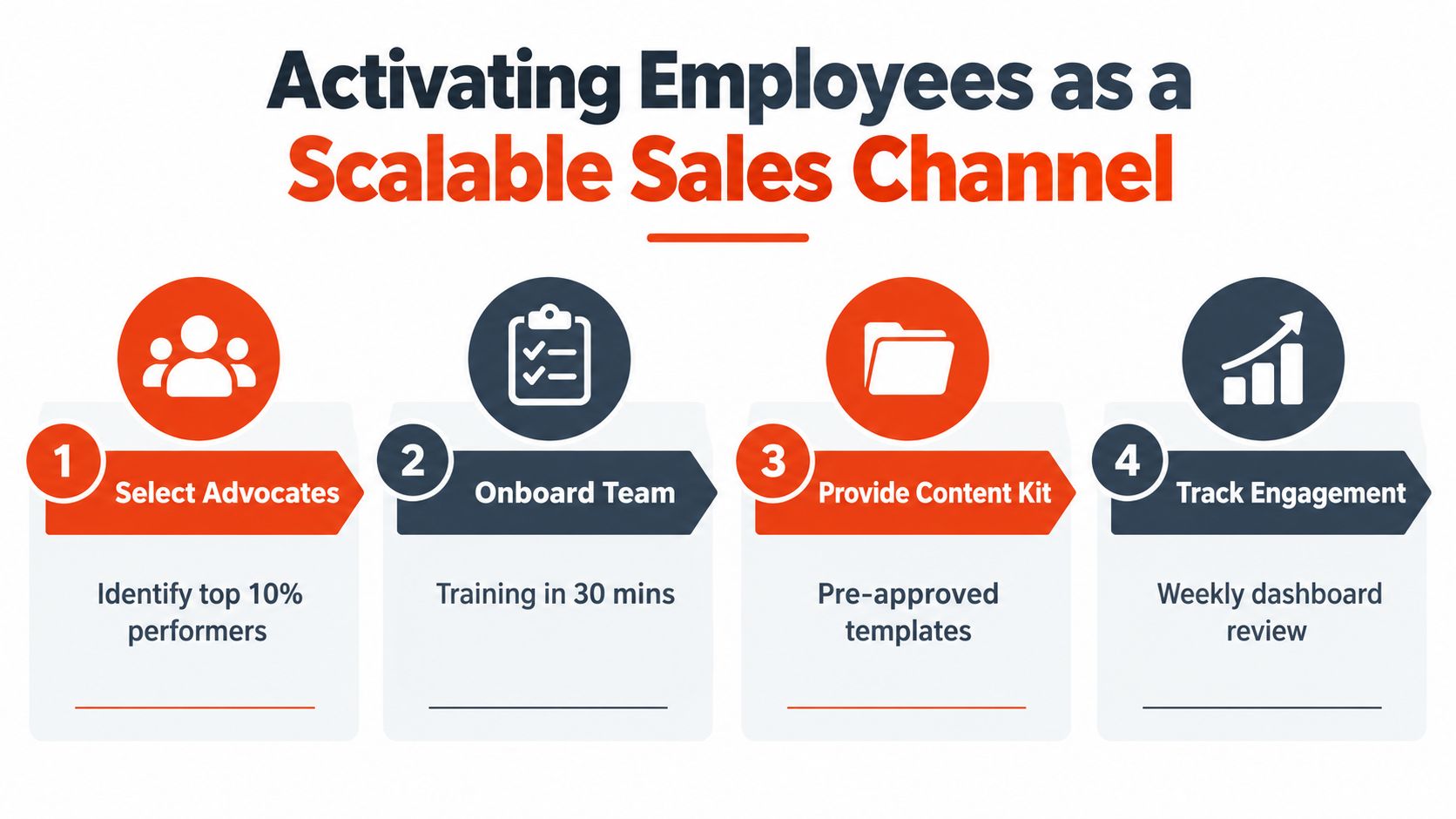
Don't recruit everyone. Pick the people whose opinions already carry weight with prospects, account leaders, practice heads, senior consultants, technical founders, and commercial directors. Those are the voices buyers are more likely to believe.
The internal guide on employee advocacy on LinkedIn is a useful way to think about the operating model, especially if you're trying to turn senior staff into a consistent audience source. The key is to make participation easy and non-disruptive.
Keep the workflow light
People won't participate if the program feels like homework. Give them a small content kit, a few approved themes, and simple posting guidance. Then create a lightweight handoff process so marketing doesn't have to chase every stakeholder for every post.
Here's the right sequence.
- Select advocates: Choose the people who already influence buying decisions or shape category trust.
- Onboard quickly: Give them a short run-through, not a long training deck.
- Provide templates: Offer prompts, not rigid scripts.
- Review engagement weekly: Watch who's attracting the right comments, profile visits, and direct replies.
Make authenticity the standard
Do not force everyone into the same voice. Senior buyers can smell canned language immediately. Let each person sound like themselves, while keeping the message aligned to the offer and the audience.
The embedded video below is a useful reminder that activation works best when the team understands the mechanics, not just the slogan.
The payoff is simple. Multiple credible voices create more entry points to the same buying committee, and that's harder for competitors to ignore.
Trigger-Based Outreach Instead of Connection Blasts
Generic connection requests waste time because they ignore context. A buyer who just changed jobs, commented on a relevant topic, or engaged with a colleague's post is much more likely to respond than someone who gets a random pitch with no reason attached. Timing is the difference between interruption and relevance.
Target the signal, not the inbox
Personalized LinkedIn requests show 30–50% acceptance rates, while trigger-event-timed messages are associated with 15–25% response rates (ZoomInfo pipeline benchmarks). That's the clearest argument against blast outreach I've seen. When the timing aligns with a visible trigger, the buyer has a reason to answer.
Trigger-based selling means watching for signals like role changes, public milestones, content engagement, or new priorities at the account level. Then you reach out with context, not a canned opener. The message should reference what changed and why it matters now.
Sequence the contact properly
Don't send a pitch the moment someone connects. Warm the account first. Comment on a post, follow the thread, or use a relevant insight that shows you paid attention.
A clean workflow looks like this.
- Log the trigger in CRM. If the signal isn't recorded, it won't be used consistently.
- Match the trigger to a buyer problem. Don't message just because something happened.
- Send a short, specific note. Make the reason for outreach obvious.
- Escalate only after interest appears. Move to a meeting ask when the buyer has engaged.
The worst outreach feels automated even when a human wrote it.
That's why connection blasts fail. They ask for time before they've earned attention. Trigger-based outreach does the opposite, it earns the right to ask by showing the buyer a reason to care.
The operational discipline matters here too. If sales, marketing, and leadership aren't logging interactions, the team will keep repeating the same weak plays. Consistency beats volume every time in social selling.
Measuring Pipeline, Not Impressions
Impressions are easy to report and hard to defend. Pipeline is harder to fake. If a social selling program cannot show how it creates conversations, meetings, and influenced deals, it is not helping the business.
Track outcomes in the order buyers move
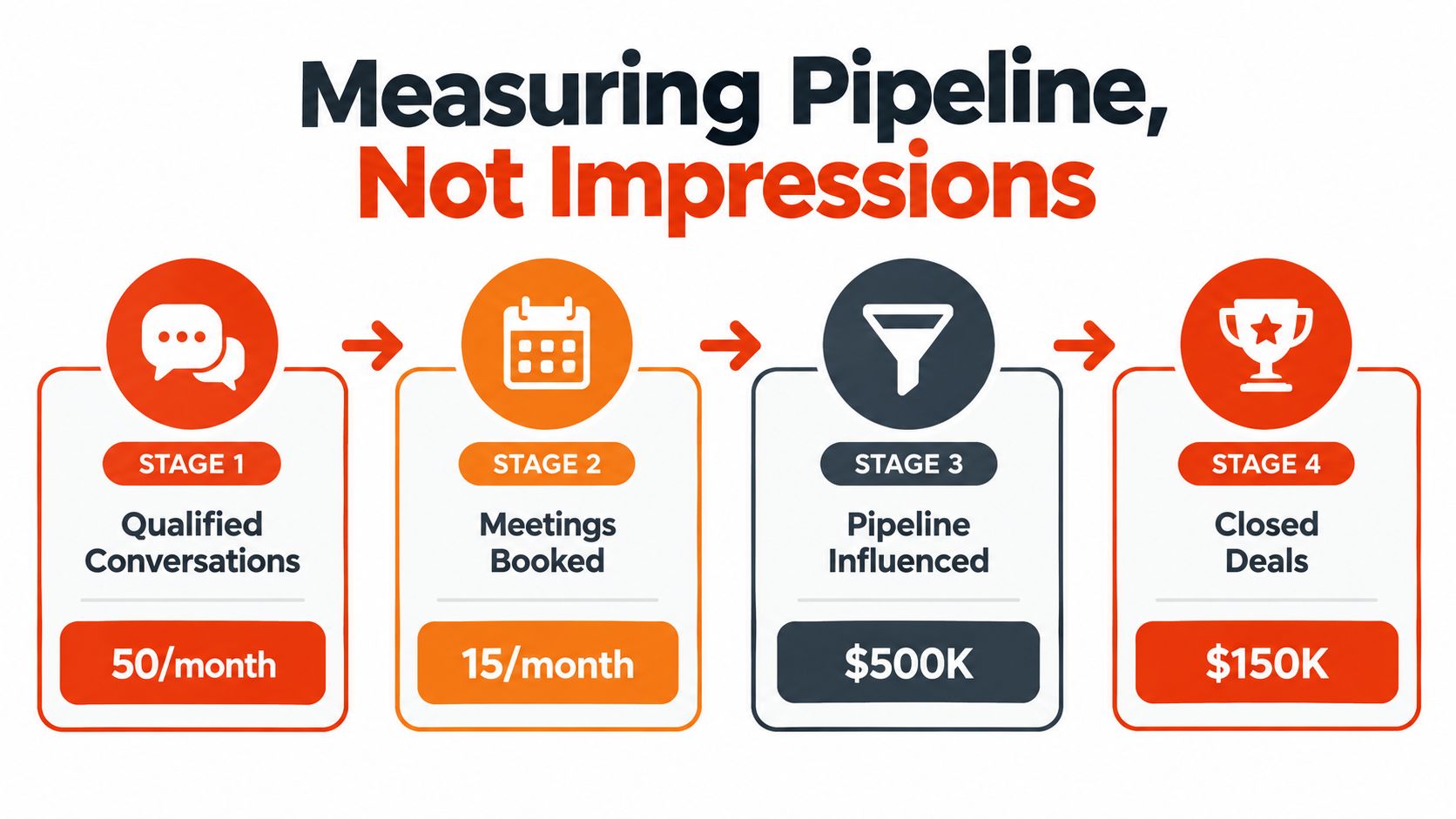
Start with the first useful signal, a qualified conversation. Then track meetings booked, pipeline influenced, and deals advanced. Each stage tells you whether the program is creating motion or just activity.
Keep the model simple.
- Qualified conversations: Are the right people replying?
- Meetings booked: Are those replies turning into calls?
- Pipeline influenced: Are social interactions tied to real opportunities?
- Closed deals: Did the motion support revenue, not just engagement?
The Social Selling Index still works as a directional indicator, because LinkedIn frames it around brand, targeting, engagement, and relationships. SSI is not the finish line. It is a health signal, not a revenue report. LinkedIn Sales Navigator
Give leadership a clean reporting view
Marketing leaders need proof that the system contributes to revenue. Sales leaders need to know which interactions deserve follow-up. That means every important touch has to be visible somewhere, usually in CRM or in a shared reporting layer tied to account ownership.
Attribution discipline matters here. Do not assign credit to a post just because it got attention. Assign credit when the interaction helped start a conversation, accelerate a stage, or reopen an account. That is the level of detail leadership can use.
If a trigger gets attention but never produces a meeting, adjust the message. If meetings appear but do not progress, tighten targeting. If profile views rise but nothing else moves, the content is attracting the wrong audience. The numbers should force decisions, not decorate a dashboard.
Rolling Out Social Selling in 90 Days
A rollout fails when every part launches at once. Start with the foundation, prove the motion with a pilot, then expand only after the system shows it can create meetings. That's how you keep the program tied to revenue instead of enthusiasm.
Days 1 to 30 focus on readiness
Use the first month to fix profile quality, define the ICP, and identify the first group of senior participants. Don't overbuild the content library. Get the positioning right first, because weak positioning makes every later step less effective.
The initial gate is simple, can a prospect understand who the person helps and why they should respond? If the answer is no, don't scale yet. Tighten the page, clean up the messaging, and make the profile consistent with the offer.
Days 31 to 60 activate the motion
Once the foundation is set, publish a steady stream of useful content and begin trigger-based outreach. Keep the pilot group small enough to manage and large enough to see patterns. The point is to learn which messages get replies and which accounts show buying signals.
Use this phase to compare conversations started against meetings booked. If people are engaging but not taking calls, the outreach is probably too broad or too early. If the right people are booking time, you've got a viable pattern.
Days 61 to 90 refine and expand
The final stage is about discipline, not drama. Tighten the triggers, improve the follow-up, and expand participation only when the system is producing repeatable outcomes. That's the moment to add more profiles, more accounts, or more senior voices.
A good pilot should leave leadership with three answers, where the meetings came from, what type of outreach worked, and which profiles created the strongest response. If those answers are clear, scaling is a decision, not a gamble.
Ploot helps B2B teams turn LinkedIn into a pipeline system by building the audience around senior profiles, detecting buying intent, and timing outreach to book meetings. If you need a practical way to move from impressions to measurable conversations, visit Ploot and see how the model fits your team.