
Most advice about LinkedIn messaging overweights copy and underweights context. Teams spend hours polishing templates, then send them from low-credibility profiles to people with no visible reason to care. When that fails, they rewrite the opener instead of fixing the problem.
Better LinkedIn messages start before the message. The profile sending it needs authority. The audience needs a reason to hear from you now. The note needs a clear value exchange, not a vague “happy to connect.” And the next step has to feel easy enough to accept without a committee meeting. That's especially true in high-ticket B2B sales, where one relevant conversation matters more than a large pile of ignored outreach.
This is why I treat LinkedIn messaging as an intent-led conversation system, not a copywriting exercise. The best teams line up segmentation, warm visibility, timing, message structure, follow-up logic, compliance, and CRM handoff. The message itself still matters. It just matters in the middle of the system, not at the beginning.
The ten practices below reflect that reality. They're written for teams selling consulting, software, HR, and technology services, where buying cycles are longer, multiple stakeholders get involved, and “interested” means very different things at each stage. If your commercial process also depends on handoff quality after the first reply, this CRM integration operations guide is useful context.
Table of Contents
- 1. Personalization Based on Profile Activity and Intent Signals
- 2. Value-First Approach Leading with Insights Over Asks
- 3. Timing Optimization When Buying Intent Is Detected
- 4. Micro-Segmentation Tailoring Messages by Persona and Vertical
- 5. Clear Calls to Action and Smooth Conversation Continuation
- 6. Building Authority Through Consistent Industry-Relevant Content Engagement
- 7. Avoiding Common Messaging Mistakes and Spam Patterns
- 8. Multi-Channel Sequencing Combining LinkedIn With Other Touchpoints
- 9. Authenticity and Transparency Building Trust Through Honest Communication
- 10. Data-Driven Optimization Testing Measuring and Refining Messaging Approach
- LinkedIn Messaging: 10 Best-Practices Comparison
- Turn Message Quality Into a Repeatable Sales System
1. Personalization Based on Profile Activity and Intent Signals
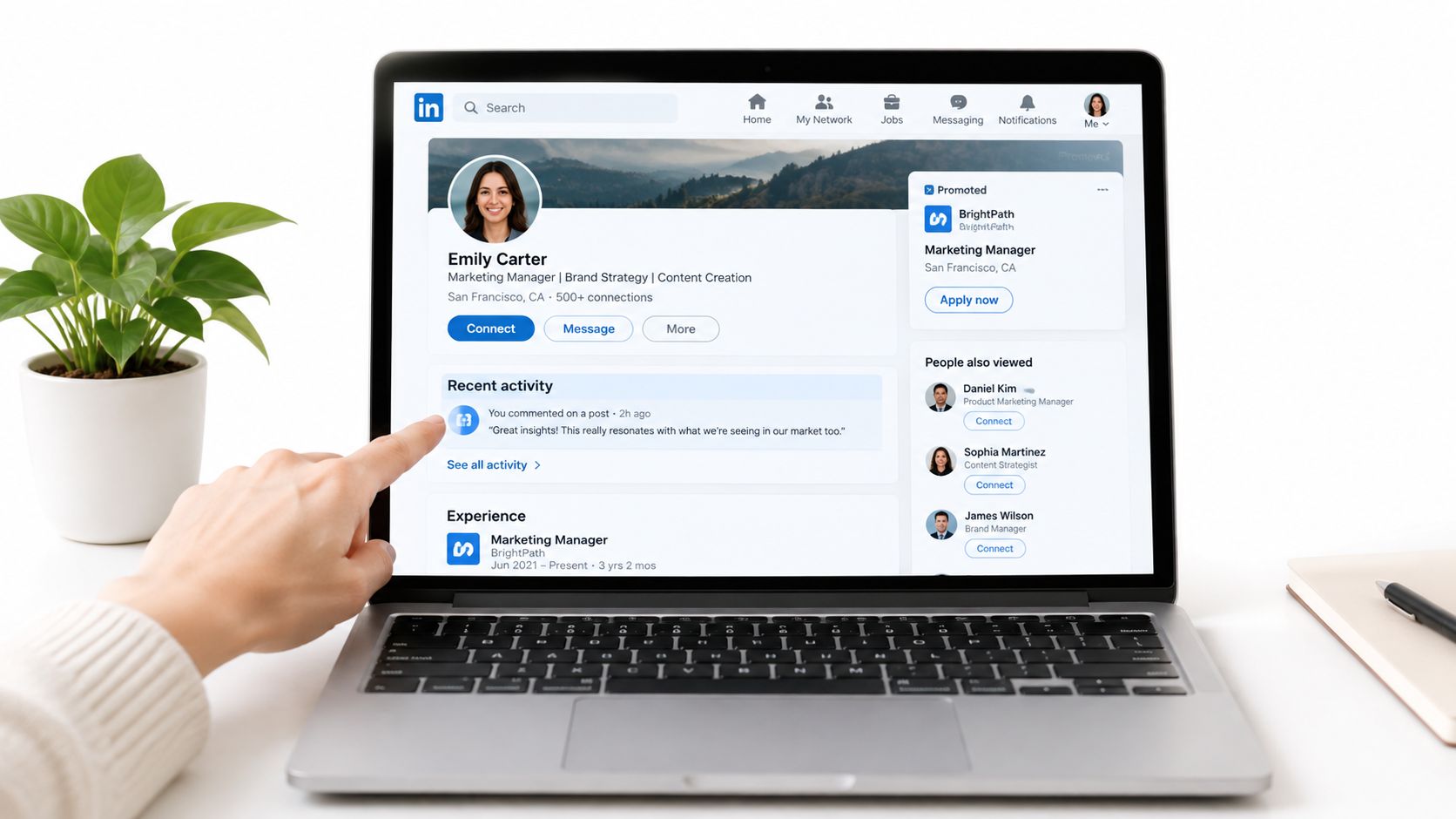
Generic personalization is weak. Using someone's first name, company, and title doesn't show research. Referencing a fresh behavior does.
If a prospect commented on a post about ERP rollouts, changed roles last week, published a hiring update, or reacted repeatedly to a topic tied to your offer, you have a live conversation hook. That's better than “I came across your profile.” It shows timing, not just targeting.
What good personalization actually looks like
A consulting director who just posted about a new service line doesn't need your full company pitch. They need a message that connects that expansion to a likely operational challenge. For example, if they've moved into a new vertical, you can mention that growing firms often hit positioning or pipeline inconsistency when service lines multiply, then ask whether that's on their radar.
A software CMO who commented on attribution problems should get a different opening. Start with the issue they engaged with, then offer one focused observation. Save the meeting ask for the end, and keep it light.
Practical rule: Personalize to a recent signal, not a permanent profile fact.
Three useful inputs tend to beat long research documents:
- Recent activity: Check the last month of posts, comments, and role changes.
- Commercial relevance: Tie the signal to a business problem you can credibly discuss.
- Social proof: Use a mutual connection, shared niche, or shared market context if it's real.
If your team wants a structured way to operationalize this, personalized LinkedIn messaging workflows help standardize signal-based outreach without turning it into canned spam.
2. Value-First Approach Leading with Insights Over Asks
The fastest way to sound transactional is to ask for time before you've earned attention. On LinkedIn, that usually reads as: “We help companies like yours do X. Open to a call?” Buyers have seen that formula too many times.
Lead with something useful instead. Not a giant attachment. Not a brochure disguised as insight. One useful observation, one relevant pattern, or one short resource that helps them think better about a current issue.
What value-first means in practice
For a head of demand generation, value might be a concise perspective on why event-led pipeline is becoming harder to scale. For an HR consulting partner, it might be an observation about employer branding pressure after expansion hiring. For a mid-market CEO, it could be a sharp note on where growth usually stalls between founder-led sales and team-led business development.
The point isn't to give away your entire method. The point is to prove you understand the problem well enough to have a worthwhile conversation about it.
A practical structure works well:
- Observation: Mention a change, tension, or pattern you noticed.
- Interpretation: Explain why it matters commercially.
- Offer: Share a short insight, framework, or example.
- Soft ask: Invite a reply, not a commitment-heavy meeting.
What doesn't work is hiding the ask behind fake generosity. If your “value” is really a teaser for a deck, buyers notice. Real value-first messaging gives enough substance that the reply can start with “interesting, say more” instead of “what are you selling?”
3. Timing Optimization When Buying Intent Is Detected
Timing changes the same message from intrusive to welcome. A note sent after visible buying activity has a different meaning than the identical note sent cold.
Independent 2026 benchmark data covering more than 15 million LinkedIn contacts found an overall reply rate of 7.2%, with HR and Talent professionals at 10.9%, C-level executives at 7.0%, April at 7.9%, and September at 6.3% in Belkins' LinkedIn outreach study. That's the practical reminder: replies are scarce enough that timing and audience selection can't be treated as secondary details.
Triggers worth acting on
Not every signal is equal. A profile view alone is weak. A cluster of relevant actions is stronger. In practice, useful triggers often include engagement with category-specific content, job changes into decision-making roles, public hiring moves, expansion announcements, or repeated activity around the problem your offer addresses.
For example, when a consulting firm partner starts discussing growth, capability expansion, or talent bottlenecks publicly, that's often a better moment to reach out than the day your SDR list says they fit your ICP.
Teams that want to systematize this need more than inbox discipline. They need signal detection tied to outreach logic. Buying-signal detection for LinkedIn outreach is relevant here because it helps move messaging from fixed sequences to event-based action.
Send the message while the context is still warm. If you wait too long, you lose the advantage of relevance and slide back into ordinary outbound.
A short walkthrough helps make this real:
4. Micro-Segmentation Tailoring Messages by Persona and Vertical
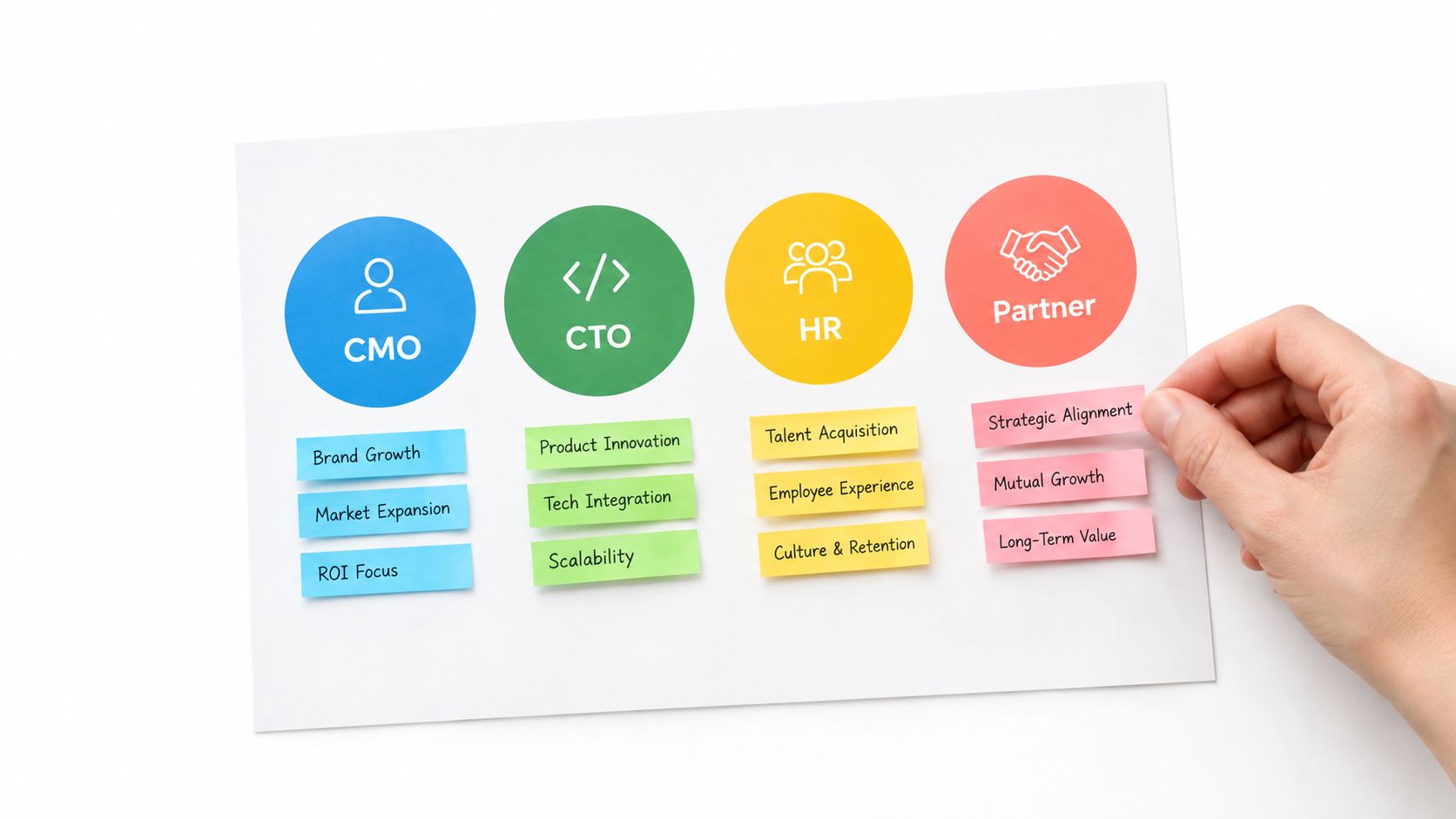
One of the biggest mistakes in LinkedIn outreach is treating “B2B buyer” like a usable segment. It isn't. A consulting partner, a software CMO, a talent leader, and a head of business development may all influence revenue, but they buy through different fears, goals, and internal politics.
Micro-segmentation fixes that. Instead of one broad sequence, build separate message angles by persona, vertical, and business model.
Segment for the buying conversation, not the org chart
An IT consulting partner often cares about utilization, margin pressure, delivery credibility, and new client acquisition. A B2B software CMO usually thinks in pipeline quality, channel mix, campaign efficiency, and sales alignment. An HR consulting leader may respond more to employer brand, hiring friction, and differentiation in a crowded services market.
That doesn't mean you need dozens of message templates. It means you need a few strong commercial narratives, each matched to a specific audience.
A simple working model:
- Role segment: Partner, CMO, CEO, demand gen lead, talent leader.
- Vertical segment: Technology consulting, business consulting, HR consulting, B2B software.
- Situation segment: Expansion, new role, hiring push, stalled pipeline, market repositioning.
Many teams discover that what looked like a messaging problem was a segmentation problem. If one audience keeps ignoring you while another replies, don't just rewrite the copy. Check whether the offer, problem framing, and sender authority match the segment.
5. Clear Calls to Action and Smooth Conversation Continuation
A good LinkedIn message should create momentum, not just interest. Too many conversations die after a positive reply because the sender asks vaguely, replies slowly, or turns the next step into scheduling admin.
The ask should be concrete and low friction. “Open to a brief call next week?” is better than “Would love to connect.” Better still is offering a clear next step with a reason to take it.
Reduce friction after the reply
Think in two stages. First, win the response. Second, convert the response into a meeting without dragging the prospect through five more messages.
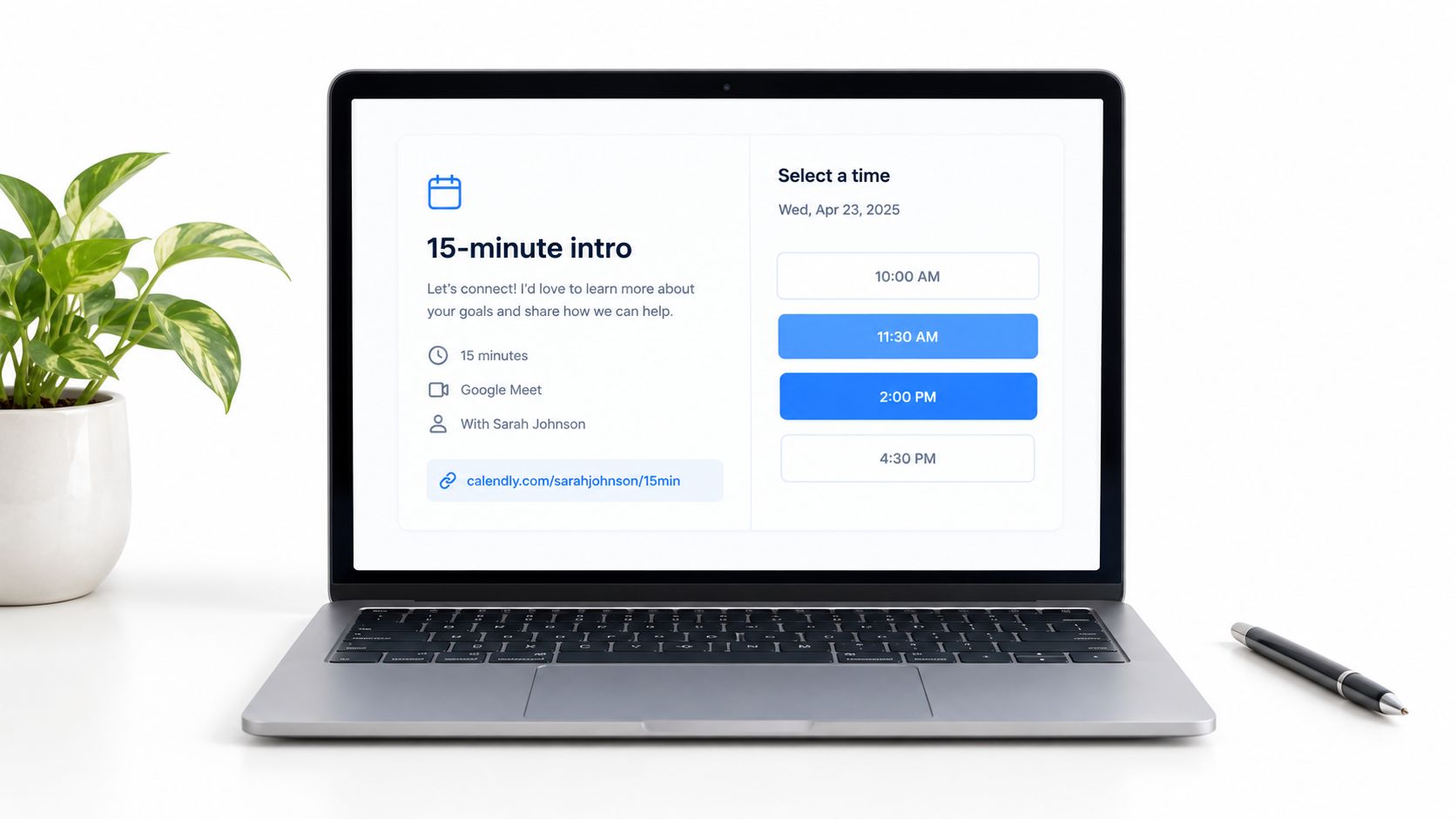
Useful patterns include offering two time options, stating the format, and tying the meeting to a specific topic. For example, a software marketing leader may respond better to “happy to compare notes on partner-led pipeline” than to “happy to show you what we do.”
What usually works best:
- Specificity: Suggest a short call and state the topic.
- Options: Offer a couple of time windows.
- Benefit: Frame the call around the prospect's problem, not your intro.
- Speed: Once they show interest, move quickly to confirm logistics.
Don't confuse engagement with progress. A pleasant DM exchange can still produce zero pipeline.
If you need examples of lower-friction outreach openings and continuation logic, how to start a LinkedIn conversation is a practical reference. The key is to avoid long back-and-forths in chat. LinkedIn is good for initiating trust. It's rarely the best place to run the whole sales process.
6. Building Authority Through Consistent Industry-Relevant Content Engagement
LinkedIn messages are judged before they are read. The profile, recent comments, post history, and who engages with that activity all shape whether your note feels relevant, credible, or disposable.
That matters more in high-ticket B2B sales than many teams admit. Buyers are not only evaluating the wording of a message. They are checking whether the sender appears close enough to the problem to be worth answering. Treat authority-building as part of the messaging system, not a brand exercise running off to the side.
A simple test helps here. Open your own profile as if you were a target account. Then ask three questions. Do recent posts show a clear point of view on the buyer's problem? Do comments on other people's content add insight or just agree politely? If someone receives your outreach today, will they find evidence that you understand their market?
Strong authority signals usually come from a few repeatable behaviors:
- Substantive comments on posts your buyers already read, especially where you can add context, a caveat, or a practical example.
- Posts that explain patterns you are seeing across deals, without naming clients or sharing anything sensitive.
- Content tied to one or two commercial themes, so your profile reinforces the same problems your outreach references.
- Visible engagement from peers, clients, or operators in the same field, which gives your message social proof without forcing it into the DM.
There is a trade-off. Consistent content engagement takes time, and it does not create immediate meetings the way a burst of outbound can. But it raises response quality, shortens trust-building, and makes intent-based outreach easier because the prospect can validate your relevance in a minute.
For teams that already produce articles or client-facing analysis, repurposing is usually the practical route. A good LinkedIn post from articles process helps keep leadership profiles active without asking sellers to become full-time creators.
Authority compounds through repetition and relevance. In practice, a solid message from a profile that has shown up intelligently in the right conversations will outperform sharper copy sent from a profile with no visible market presence.
7. Avoiding Common Messaging Mistakes and Spam Patterns
Spam on LinkedIn rarely starts with volume alone. It starts when the message ignores intent.
A buyer can tell the difference between a note triggered by a real signal and a sequence fired because someone entered a list. That distinction shapes reply quality, meeting quality, and account-level trust. For high-ticket B2B sales, poor messaging does more than suppress response rates. It trains the market to treat your outreach as background noise.
The pattern is usually easy to spot. A seller sends a connection request with no context, follows with a product pitch, then chases with a generic nudge. Nothing in that flow reflects buying stage, role, or urgency. It treats LinkedIn as a copy problem when the issue is system design.
One benchmark often cited in discussions of LinkedIn outreach, summarized in Leadriver's review of InMail response rate benchmarks, points to a wide response-rate range for potential-client outreach. The practical lesson is simple. execution quality and relevance still decide whether a message gets read, ignored, or remembered for the wrong reason.
Here are the failure modes that show up repeatedly in B2B teams:
- Token personalization: Mentioning a city, school, or recent post without connecting it to a business issue.
- No reason for outreach now: The message explains the offer but never explains the trigger.
- Asking for a meeting before earning interest: The seller jumps to calendar talk before the buyer has reacted to the problem.
- Follow-ups with no progression: Each message repeats the first one instead of adding a new observation, example, or question.
- Profile-message mismatch: The outreach claims expertise that the sender profile cannot support.
- Unsafe team behavior: Different reps use different claims, cadence, or targeting standards, which creates brand and compliance risk.
The fix is operational, not cosmetic.
Set rules for who gets messaged, what signal justifies outreach, how many attempts are acceptable, and what must be true before a meeting ask appears. If a prospect viewed a pricing page, changed jobs, engaged with a category problem, or posted about an initiative, the message should reflect that exact context. If no clear signal exists, forcing outreach usually produces low-value conversations and higher spam risk.
A good test is this: remove the prospect's name and company from the message. If it still reads plausibly to fifty other accounts, it is probably too generic for consultative selling.
Teams should also treat compliance as part of message quality. Shared language on claims, opt-out handling, targeting boundaries, and follow-up limits protects the account and improves consistency across reps. One careless outbound burst from a senior seller can create more friction than a month of disciplined outreach can repair.
Strong LinkedIn messaging works like a qualification layer. It filters for active interest, starts a relevant exchange, and earns the right to ask for time. That is very different from sending polished copy at scale and hoping something lands.
8. Multi-Channel Sequencing Combining LinkedIn With Other Touchpoints
Treat LinkedIn as one step in the conversation system, not the whole system.
High-ticket B2B deals rarely move from a single DM to a meeting. Buyers need context, internal alignment, and a reason to keep engaging. LinkedIn is useful because it establishes identity fast and lowers the friction of a first exchange. It is weaker at carrying detail, forwarding internally, or supporting a more developed commercial case.
The practical question is not which channel is best. It is which channel fits the buyer's current level of intent.
If a prospect engaged with a post, viewed your profile, or accepted a connection after a relevant trigger, LinkedIn is usually the right place to start. If they need a clearer business case, email gives you room to explain the problem, share a resource, or recap the logic behind your outreach. Phone is best reserved for accounts with meaningful potential and some evidence that timing may be right.
A simple sequence for an enterprise account might run like this:
First, a seller or subject matter expert interacts publicly where the buyer can see it. Then a short LinkedIn message references the same issue and checks whether it is currently relevant. If there is no reply but the signal still looks real, an email follows with a tighter point of view, a customer pattern, or a concise teardown of the problem. A call only makes sense once the account has shown enough interest to justify that interruption.
That structure matters because repetition across channels usually hurts performance. Reinforcement works. Duplication does not. Sending the same pitch in LinkedIn, email, and voicemail makes the outreach feel automated, even when it was manually sent.
Bereach's discussion of LinkedIn response-rate workflows makes the sequencing point well. Warmer campaigns tend to outperform colder connect-then-message flows, and follow-ups work better when they are spaced out and add a new reason to respond.
Use that in a channel plan:
- LinkedIn for relevance and a low-friction opening
- Email for detail, proof, and recap
- Phone for priority accounts where timing and stakes justify direct contact
- Content touchpoints to support credibility between messages
One operational rule helps here. One account should have one visible motion. If a rep sends a LinkedIn note, marketing drops the prospect into a generic nurture, and an executive calls in the same week, the buyer experiences noise rather than coordination.
Good sequencing feels coherent from the buyer side. Each touchpoint should answer a different question: who are you, why now, why this problem, and why continue the conversation. That is how multi-channel outreach improves meeting conversion without turning into channel spam.
9. Authenticity and Transparency Building Trust Through Honest Communication
LinkedIn buyers can spot performance fast. A message that acts personal while hiding a sales agenda usually gets ignored, even if the copy is polished.
For high-ticket B2B outreach, authenticity is less about tone and more about intent clarity. The prospect should understand three things within a few seconds: who you are, why you chose them, and what kind of conversation you want to start. If any of that is vague, the message creates friction because the buyer has to decode motive before deciding whether to engage.
A direct note often works better than a clever one:
“I lead growth partnerships at [Company]. I reached out because your team appears to be hiring into enterprise sales, and that usually creates pressure on pipeline quality. I may be wrong, but if that is a current focus, I can share what we see work in similar teams.”
That kind of message does two jobs at once. It states commercial intent openly, and it leaves room for uncertainty. Both matter. Buyers trust outreach more when the sender sounds accurate instead of overconfident.
Use this as a practical check before sending:
- State your identity plainly. Role, company, and context should be obvious.
- Name the trigger. Mention the hiring move, expansion, content post, funding event, or other signal that caused the outreach.
- Avoid certainty you have not earned. “This may be relevant” is often stronger than claiming you already know their priorities.
- Be honest about the ask. If you want to explore fit, say that. If you want feedback on whether the problem is live, say that instead.
There is a commercial trade-off here. Full transparency can lower raw reply volume because it filters out curiosity clicks and polite responses. It often improves conversation quality because the people who reply understand the topic and are willing to discuss it.
The same standard applies after the first response. If the account is not a fit, say so. If timing is wrong, acknowledge it and set a real follow-up point. If another colleague should take over, explain why the handoff makes sense. Trust builds when the conversation stays consistent from first message to meeting, not when the opener sounds human and the rest of the sequence turns scripted.
10. Data-Driven Optimization Testing Measuring and Refining Messaging Approach
If your team can't explain why one LinkedIn motion works better than another, you don't have a messaging strategy. You have anecdotes.
Measurement should focus on response quality and meeting quality, not vanity metrics. Impressions and profile views may support authority building, but they don't tell you whether the outreach engine is creating qualified sales conversations.
What to track and what to ignore
A useful benchmark from Expandi's 2026 dataset of 13.2 million connection requests found 28.5% connection acceptance, 10.4% reply rate on outbound messages, and only 3.0% reply rate on connection-request notes in Expandi's state of LinkedIn outreach report. The operational takeaway is clear. Don't obsess over the note attached to the connection request if your post-acceptance messaging is weak.
Track the pieces that reveal your best options.
- Acceptance rate by audience segment
- Reply rate by sender profile
- Positive reply rate by message angle
- Meeting-booked rate by trigger type
- Show rate and qualified-opportunity rate after the meeting
A few testing rules keep teams honest:
- Change one variable at a time: audience, opener, CTA, or sender.
- Segment your reporting: one blended average hides what's happening.
- Judge by downstream quality: a high reply rate from poor-fit accounts isn't success.
- Review often: small weekly adjustments beat quarterly reinventions.
Multiple 2026 benchmark sources summarized by LeadSpark's LinkedIn response-rate benchmarks overview also report that messages under 400 characters outperform longer ones by about 22%, personalized messages can lift response by roughly 30%, and Tuesday to Thursday mornings are often the strongest windows. Those are useful testing hypotheses, not excuses to skip segmentation and intent.
LinkedIn Messaging: 10 Best-Practices Comparison
| Strategy | Implementation Complexity 🔄 | Resource Requirements 💡 | Expected Outcomes ⭐ / 📊 | Ideal Use Cases | Key Advantages ⚡ |
|---|---|---|---|---|---|
| Personalization Based on Profile Activity and Intent Signals | 🔄🔄 (moderate, manual + tooling) | 💡 Time per message; profile monitoring tools; intent feed | ⭐⭐⭐⭐ / 📊 Response rates ↑ 3–5× vs generic | Outreach to active prospects with visible LinkedIn activity | ⚡ Higher reply rates; stronger credibility |
| Value-First Approach: Leading with Insights Over Asks | 🔄🔄 (moderate, content prep required) | 💡 Research, industry content, subject-matter experts | ⭐⭐⭐⭐ / 📊 Better engagement and trust; longer sales cycles possible | Complex B2B deals where thought leadership matters | ⚡ Builds rapport; reduces "salesy" perception |
| Timing Optimization: Messaging When Buying Intent is Detected | 🔄🔄🔄 (higher, needs real‑time signals + automation) | 💡 Intent-detection tech, alerts, rapid outreach workflows | ⭐⭐⭐⭐⭐ / 📊 Response rates often ↑ 5–10×; more conversions | Time-sensitive buying cycles and product evaluations | ⚡ Contacts prospects at peak interest; efficient resource use |
| Micro-Segmentation: Tailoring Messages by Persona and Vertical | 🔄🔄🔄 (high, many message variants) | 💡 Persona research, content variations, maintenance | ⭐⭐⭐ / 📊 Response rates ↑ ~2–3× vs generic messaging | Multi‑persona accounts or varied vertical targets | ⚡ Higher message relevance; better positioning per buyer |
| Clear Calls-to-Action and Smooth Conversation Continuation | 🔄🔄 (moderate, process & follow-up discipline) | 💡 Scheduling tools (Calendly), templates, follow-up cadence | ⭐⭐⭐⭐ / 📊 Higher meeting booking and show-up rates | Outbound sequences aiming to convert conversations to meetings | ⚡ Faster meeting conversion; reduced friction |
| Building Authority Through Consistent, Industry-Relevant Content Engagement | 🔄🔄 (moderate ongoing effort) | 💡 Time for regular engagement (comments, posts), content calendar | ⭐⭐⭐⭐ / 📊 Improved recognition; response rates ↑ (3–5× reported) | Long‑term brand building and pre-outreach recognition | ⚡ Increases trust and message receptivity over time |
| Avoiding Common Messaging Mistakes: Spam Patterns and Red Flags | 🔄🔄 (moderate, policy & training) | 💡 Training, governance, monitoring to prevent flags | ⭐⭐⭐ / 📊 Preserves deliverability and reputation; fewer blocks | Teams scaling outreach who must maintain account health | ⚡ Protects channel longevity; reduces spam filtering |
| Multi-Channel Sequencing: Combining LinkedIn with Other Touchpoints Strategically | 🔄🔄🔄 (high, coordination across channels) | 💡 CRM & automation, content assets, phone/email integration | ⭐⭐⭐⭐ / 📊 Higher contact and conversion rates than single channel | ABM and complex buying committees across channels | ⚡ Multi-touch reinforcement; better attribution |
| Authenticity and Transparency: Building Trust Through Honest Communication | 🔄🔄 (moderate, cultural change + training) | 💡 Messaging guidelines, role clarity, coaching | ⭐⭐⭐⭐ / 📊 Stronger long‑term relationships; higher-quality responses | Senior‑level outreach where reputation matters (partners, directors) | ⚡ Builds durable trust; filters low‑quality leads |
| Data-Driven Optimization: Testing, Measuring, and Refining Messaging Approach | 🔄🔄🔄 (high, requires analytics discipline) | 💡 Tracking systems, A/B testing, analytics expertise | ⭐⭐⭐⭐⭐ / 📊 Identifies top-performing approaches; improves ROI over time | Scaling outreach programs that need predictable results | ⚡ Continuous improvement; evidence-based allocation of resources |
Turn Message Quality Into a Repeatable Sales System
The common thread across these LinkedIn messaging best practices is simple. Good messages don't rescue a weak system. Strong systems make good messages easier to write, easier to send at the right time, and easier to convert into real meetings.
That execution sequence is usually straightforward. Build authority from credible profiles. Define narrow audience segments. Watch for buying signals. Personalize around a recent, relevant context. Offer one useful idea. Make one clear ask. Follow up with a new angle instead of the same nudge. Support the motion with email or phone when it makes sense. Then measure qualified meetings, not just inbox activity.
For most B2B teams, the first week of improvement doesn't require a giant rebuild. Start by choosing one sender profile with real market credibility. Pick two audience segments instead of six. Write two message angles matched to those segments. Define the trigger events that justify outreach. Set basic tracking in your CRM or spreadsheet for acceptance, replies, positive replies, booked meetings, and qualified meetings. Then review message performance by segment, not as one blended number.
A practical first-week implementation rhythm looks like this:
- Day one: Audit the sending profiles. Fix weak headlines, vague summaries, and empty recent activity.
- Day two: Define the segments and list the intent signals that matter commercially.
- Day three: Draft short message variants tied to those signals and assign clear CTAs.
- Day four: Launch a small controlled batch from credible profiles only.
- Day five: Review response quality, not just response volume, and adjust one variable.
Keep the system honest. If a message gets replies but no serious meetings, the issue may be the audience or the ask. If authority profiles outperform junior profiles, that isn't a copy insight. It's a channel-design insight. If some verticals respond and others don't, segment harder before you write more copy.
This is also where tooling can help, provided it supports a real sales process instead of just automating noise. Teams with long, high-ticket B2B cycles often need a way to activate senior profiles, detect intent in their audience, and trigger outreach while the context is still relevant. Ploot is one relevant option for that kind of workflow. Its fit is strongest when you want LinkedIn to contribute qualified meeting generation, not just visibility.
If you're also improving how your team presents itself across channels, a studio-quality video maker can help sharpen profile and campaign assets that support trust before the first message is sent.
Ploot helps B2B teams turn trusted LinkedIn profiles into a structured meeting-generation channel. It focuses on building the audience around partners, directors, and senior managers, detecting who is showing interest, and activating outreach at the right moment. If that matches how you want to apply these messaging practices, visit Ploot.