

61% of surveyed B2B buyers preferred a completely rep-free buying experience. That changes what a serious buyer should expect from b2b lead generation platforms, because the platform now has to detect intent before sales ever gets a clean handoff.
| Platform type | What it optimizes for | Main strength | Main limitation |
|---|---|---|---|
| Contact databases | Finding names and firmographics | Fast list building | Weak timing signals |
| Intent data platforms | Detecting active accounts | Better prioritization | Often stops at the account level |
| Authority-led activation platforms | Turning signal into qualified conversations | Better fit for high-ticket buying | Needs stronger workflow discipline |
The market also reflects that shift. Broader B2B lead-generation estimates range from USD 10.87 billion in 2024 in one analysis to USD 129.3 billion in 2024 in another, and that gap matters because the category covers more than software subscriptions. It includes services, data, intent, sales intelligence, advertising, and the infrastructure that helps companies qualify buyers rather than just find contacts.
Table of Contents
- The Modern B2B Buyer Journey
- Categories of Lead Generation Platforms
- Integration Workflows and Sales Alignment
- Moving Beyond Basic Lead Volume Metrics
- Capturing Value from the Dark Funnel
- Evaluating Trust and Authority Signals
- Strategic Recommendations for Enterprise Buyers
- Next Steps for Platform Implementation
The Modern B2B Buyer Journey
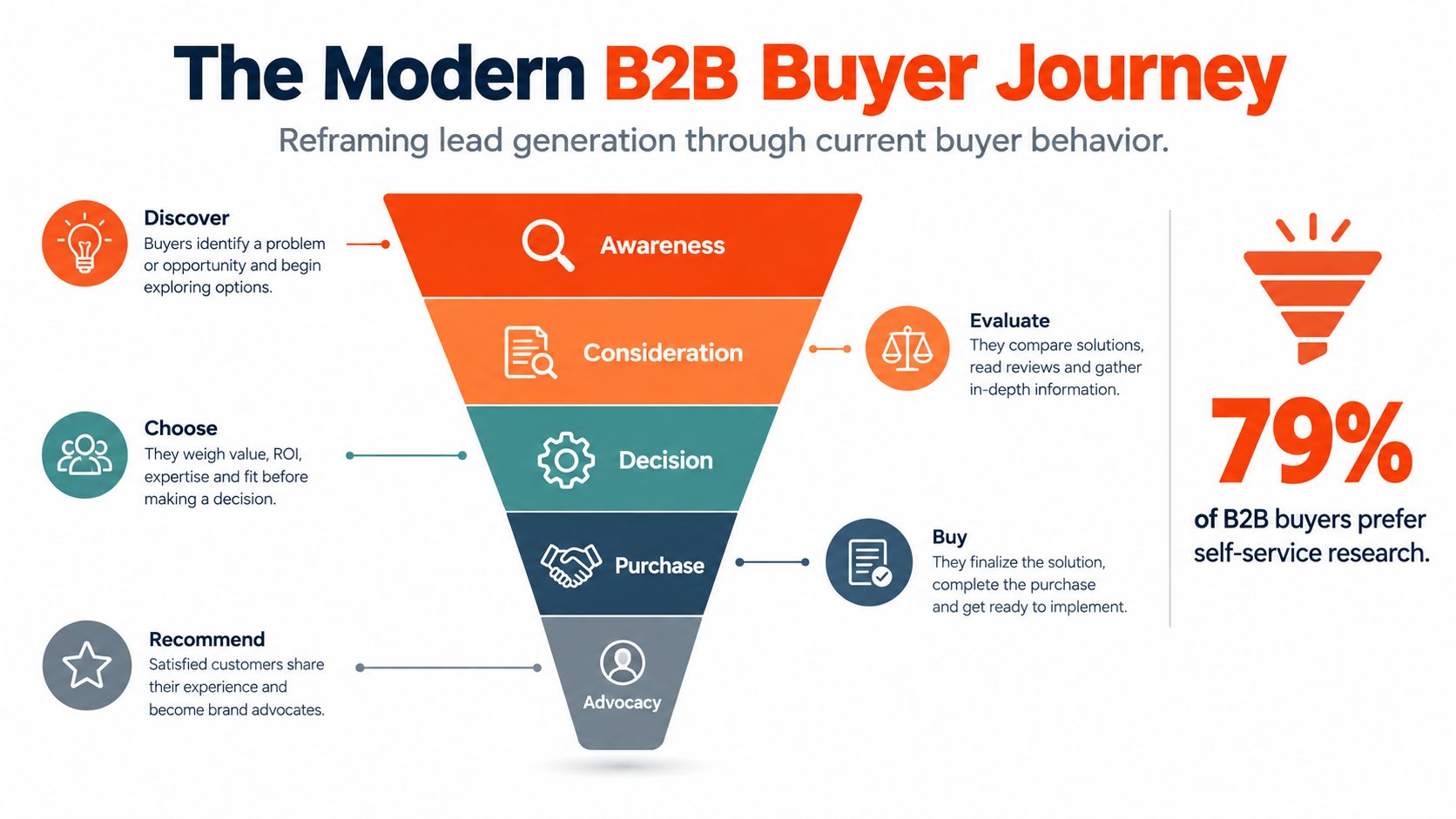
The modern buyer rarely starts by answering a form or booking a call. 61% of surveyed B2B buyers preferred a completely rep-free buying experience, and that means the first job of a platform is no longer to capture attention, but to recognize it while the buyer still wants to research privately.
What changed in the path to purchase
Buyers now move through more channels, compare more sources, and delay direct contact longer than they used to. McKinsey's 2024 B2B Pulse research found that buyers used an average of 10.2 interaction channels, up from 5 in 2016, which shows how fragmented the path has become. In other words, the old model of cold list plus sequence plus meeting invite is too blunt for most enterprise motions.
For high-ticket consulting, HR services, and B2B software, the implication is simple. Your audience may already have opinions about vendors before a rep speaks to them, so a platform has to identify meaningful engagement, not just broad reach. That's why the strongest b2b lead generation platforms now compete on timing, qualification, and the quality of the signal, not on contact count alone.
A platform that only sees form fills is already late for most complex B2B deals.
The market opportunity also explains why this is becoming more strategic. Research compilers project intent-data spending to rise from USD 5.5 billion to USD 11.9 billion by 2030, and sales-intelligence software from USD 1.4 billion to USD 5.1 billion. That growth points to a clear buyer preference, more investment in signals that tell teams who is active and when to act.
Categories of Lead Generation Platforms
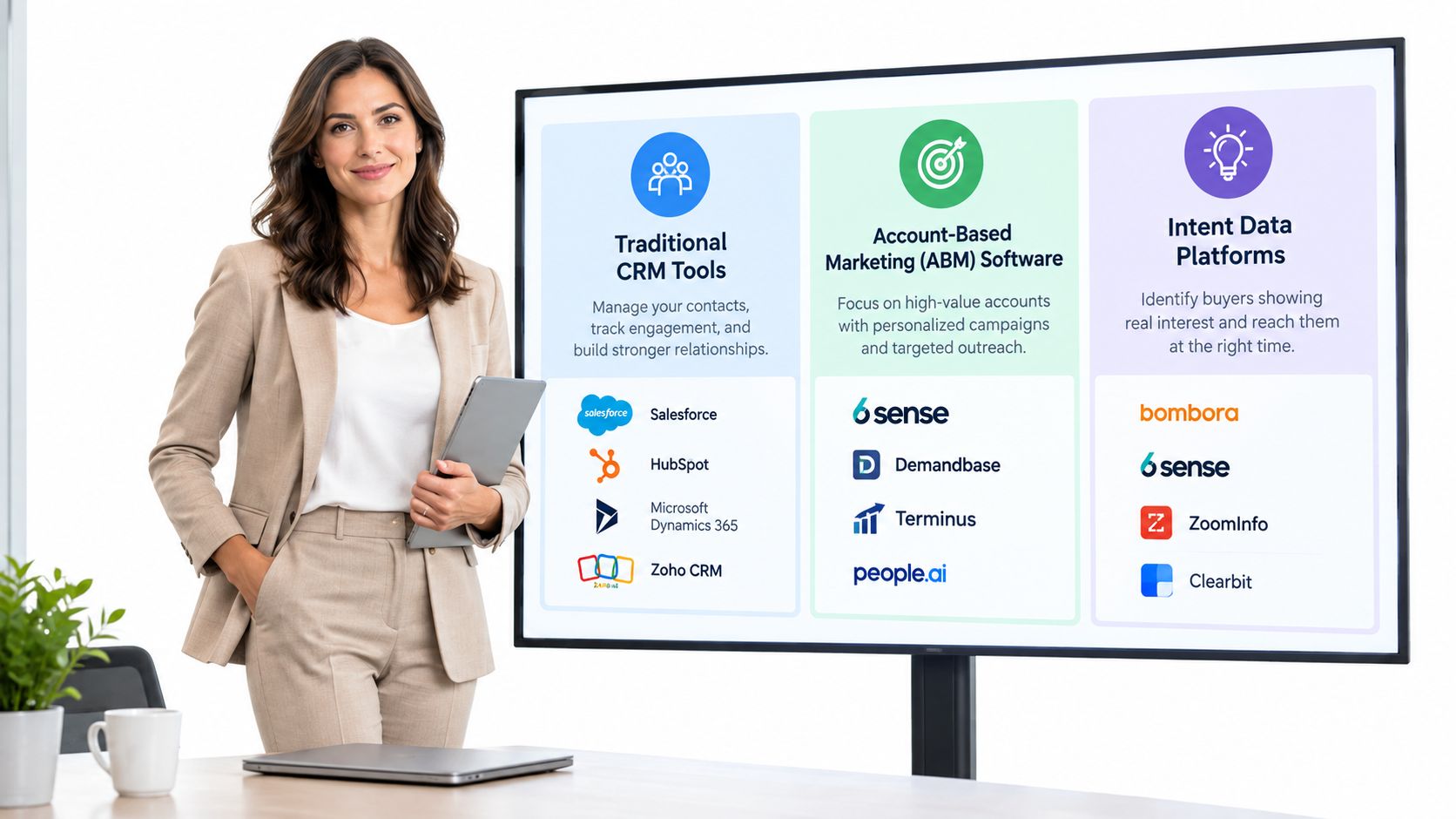
Not every platform in this category does the same job. The cleanest way to evaluate b2b lead generation platforms is by data mechanics, because a contact database, an intent layer, and an activation platform solve different problems and fail in different ways.
Contact databases
These tools focus on who a prospect is, where they work, and how to reach them. They're useful when a team needs scale, list building, or enrichment, but they usually depend on static records and broad filters rather than real buying signals. That makes them efficient for coverage, but weaker when timing matters.
Intent data aggregators
Intent tools track behavior that suggests a company is in market, which helps marketing and sales focus on active accounts. Their strength is prioritization, not always contact-level precision, so they often need a second system to identify the right people and trigger outreach. The technical value here is direction, not completion.
Audience activation platforms
These systems combine authority, engagement, and outreach into a more controlled workflow. They're built for teams that care less about raw reach and more about whether the audience is both relevant and likely to convert into a sales conversation. For buyers comparing architecture rather than marketing copy, that distinction is usually the one that matters.
If you want a broader scan of the category, the AEO-friendly lead generation tools roundup from OGTool is a useful adjacent reference, especially if you're separating discovery tools from execution tools.
This sales engagement platform guide is a useful companion when you're comparing where engagement ends and lead generation begins.
Integration Workflows and Sales Alignment
A lead platform that doesn't sync cleanly with CRM and sales tools creates more work than value. In enterprise teams, the issue isn't whether data exists, it's whether sales can use it without switching systems, re-keying records, or losing context in handoff.
Where integration usually breaks
The most common failure is a split between marketing visibility and sales action. Marketing sees activity, sales sees a stale record, and nobody can prove which source deserves credit for the conversation. That problem gets worse when teams route leads through disconnected tools that each have their own definitions of engagement and qualification.
A better workflow keeps the signal attached to the record from first touch to opportunity. That means the platform should pass context into the CRM, not just a name or email address, and it should do so in a way RevOps can audit later. Without that, the platform may create motion but not continuity.
If a rep has to leave the CRM to understand the lead, the workflow is already leaking value.
The practical test is simple. Ask whether the system supports clean ownership, stage updates, and activity history without forcing manual cleanup. The same standard applies to integrations with sales engagement tools, where the platform should support the next action instead of forcing reps to reconstruct the story.
For a more detailed example of what CRM-connected handoff looks like, see the internal note on CRM integration in lead workflows. A platform that can't survive that scrutiny usually isn't ready for a high-ticket revenue engine.
Moving Beyond Basic Lead Volume Metrics
Volume looks impressive until you inspect conversion. Benchmark compilations place lead-to-MQL conversion near 31%, while MQL-to-SQL conversion is typically only 12–21%, which means qualification logic matters more than adding more names to a database. That's the central mistake in many platform evaluations, they reward breadth before proving usefulness.
What to score instead
The better question is whether a platform improves the movement from one meaningful stage to the next. For enterprise teams, that means asking whether it can create qualified conversations, not just leads, and whether it can show how each source contributes to pipeline. A system that reports impressions or connection volume without stage-level conversion isn't showing commercial value, it's showing activity.
A good pilot scorecard should include activated-profile reach, engaged accounts, qualified conversations, accepted meetings, opportunity creation, and revenue-weighted pipeline. Those metrics make it easier to see whether a platform is tightening qualification or merely expanding the top of funnel. They also force alignment between marketing definitions and sales reality.
Practical rule: if the platform can't explain why a lead should advance, the lead count doesn't matter much.
That logic becomes even more important in consulting and B2B software, where a small improvement in qualification can matter more than a large increase in raw traffic. For a deeper lens on pipeline economics, the pipeline generation framework is the right internal complement to this analysis.
Capturing Value from the Dark Funnel
Traditional attribution misses a lot of buyer activity because buyers don't always signal themselves in trackable ways. Independent marketing analysis describes that untracked pre-conversion behavior as the dark funnel, and the useful response is to measure observable proxies rather than pretend the whole journey is visible.
What that means in practice
The strongest platforms pay attention to repeat visits to high-intent pages, unknown-source pipeline, and account-level behavior that suggests a real buying process is underway. Those signals don't prove causality, but they do show where attention is building. That distinction matters because deterministic attribution often undervalues trusted, person-led channels that shape buying before any form fill appears.
This is especially relevant for senior buyers in long-cycle environments. They may compare providers privately, talk to peers, and consume content long before they submit a request. A platform that can detect that pattern gives the sales team a chance to intervene earlier, even if it can't claim perfect source credit.
How to judge platform usefulness
Look for systems that separate signal detection, identification, and revenue influence. Those are three different layers, and too many tools blur them together in their marketing. The best ones make it possible to act on early engagement without overstating what they can prove.
The right evaluation question is not whether every touch is attributable. It's whether the platform helps your team identify commercially meaningful activity sooner than manual processes do. In high-ticket sales, that's often where the value lives.
Evaluating Trust and Authority Signals
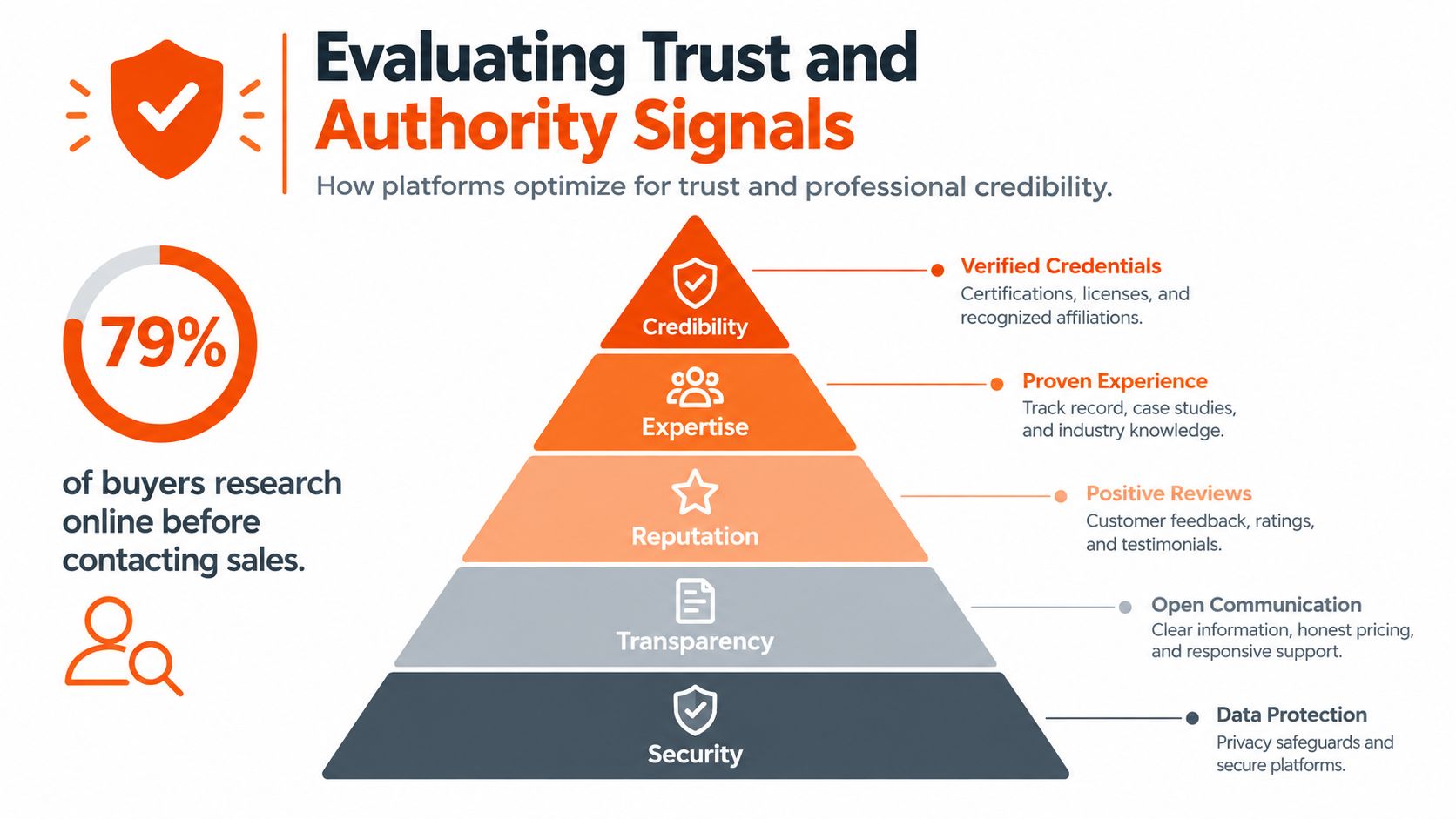
Trust is now part of the lead-generation stack, not just a brand issue. Recent buyer research shows that 79% of software buyers say AI search has changed how they research, and that one-third of buyers use AI chatbots to surface vendors, which means buyers are testing public credibility earlier and more aggressively than before.
What authority signals actually matter
A useful platform should strengthen recognition before the first direct conversation. That can come from visible expertise on personal profiles, repeated exposure across the right audience, and content that makes a company easier to shortlist when buyers use AI or peer research to compare options. The point isn't to replace outreach, it's to make outreach arrive after the buyer already knows who you are.
A simple scoring method helps here:
- Profile credibility: Does the platform use real sector expertise, or does it hide behind generic messaging?
- Audience relevance: Are the people seeing the activity part of the right buying committee?
- Signal quality: Does the platform react to genuine interest, or only to superficial engagement?
- Shortlist influence: Does it help the buyer remember and consider the brand later?
- Conversation readiness: Does it move the buyer toward a meeting without forcing a hard sell?
If a tool can't improve those five areas, it's probably optimizing for noise. For teams that also want a practical channel for submission and visibility work, the manual submission service for AI founders is a useful resource to understand how authority discovery gets distributed across the web.
How to think about the channel mix
Automated outreach still has a place, but it's weaker when the shortlist is already formed. Authority-led systems work earlier in the journey, before the buyer has fully narrowed the field. That's the difference between creating recognition and chasing attention.
Strategic Recommendations for Enterprise Buyers
For consulting firms, B2B software companies, and demand-gen teams with long sales cycles, the right platform is usually the one that can prove influence on qualified pipeline, not just deliver more contact records. A database may help with coverage, but it won't solve the harder problem of finding buyers who are already leaning in.
Match the tool to the motion
If you sell high-ticket services, prioritize platforms that combine intent signals with human authority. If you run a software motion with a more structured funnel, look for systems that integrate cleanly with CRM and show stage progression clearly. If your team is under pressure to show pipeline, the platform has to make that story visible to both marketing and sales leadership.
Ploot fits as one option among others in this space. It builds LinkedIn audiences for partners, directors, and senior managers, detects buying intent inside those audiences, and contacts people at the right moment to book qualified meetings.
A practical buyer lens helps more than a feature checklist:
- Consulting leaders should care about who can detect pre-shortlist interest.
- Software CMOs should care about whether the platform can tie engagement to pipeline.
- Demand-gen heads should care about whether the system reduces dependence on broad top-of-funnel activity.
The platform that wins is the one that aligns with how your buyers research, not the one with the longest feature page. That's especially true in markets where authority, timing, and qualification determine revenue more than volume ever will.
Next Steps for Platform Implementation
Start with a controlled pilot, not a full rollout. A three-month test with agreed success criteria is usually enough to show whether the platform improves qualified meetings, stage progression, and pipeline contribution without disrupting existing workflows.
Define the pilot before you buy
The cleanest pilot begins with a narrow audience, a clear ICP, and a shared definition of success between marketing and sales. Decide which signals count, who owns follow-up, and what qualifies as an accepted meeting before the platform goes live. If those definitions are vague, the results will be too.
Track the platform against the few metrics that matter most to your revenue team. That means stage-level conversion, opportunity creation, and revenue-weighted pipeline, not just activity totals or contact counts. It also means reviewing whether the system is helping reps act faster on better signals.
Validate operational fit
A platform can look strong in a demo and still fail in the field if handoff, routing, or reporting break down. Test how it behaves inside your CRM, how quickly your team can use the output, and whether sales trusts the context it provides. If adoption is low, the workflow is probably too indirect.
Don't scale a lead-generation platform until the sales team can explain why it changes the conversation.
The last step is simple. Compare what the platform promised with what it changed in the pipeline, then keep only the motions that improved qualified output. That discipline keeps the stack honest.
If you're evaluating b2b lead generation platforms for long-cycle, high-ticket sales, Ploot is built for the part of the journey where authority, timing, and qualification matter most. Visit Ploot to see how it turns LinkedIn audiences into buying signals and qualified meetings.